
Testosterone Replacement Therapy (TRT) in Houston
Personalized, Physician-Guided
Testosterone Therapy for Men
RenewFX provides physician-guided testosterone replacement therapy in Houston, personalized to your symptoms, health history, goals, and laboratory findings.
RenewFX provides physician-guided testosterone replacement therapy in Houston, personalized to your symptoms, health history, goals, and laboratory findings.
Our comprehensive approach combines individualized treatment with ongoing medical monitoring and follow-up.
- Comprehensive Hormone & Health Evaluation
- Physician-guided TRT Treatment Plans
- Experienced, Board-Certified Physician Oversight
- Ongoing Lab Monitoring & Treatment Adjustments
- Telemedicine Care Available Across Texas
Questions? Call: +1 (713) 936-4103

Testosterone Therapy in Houston & Across Texas
RenewFX provides physician-guided testosterone replacement therapy and hormone therapy for men in Houston and throughout Texas. Our telemedicine-based model makes it convenient for eligible patients to complete consultations virtually, arrange laboratory testing locally, and receive personalized treatment with ongoing physician oversight and medical monitoring.

Comprehensive Hormone Evaluation
We look beyond a single testosterone result, evaluating symptoms, health history, medications, lifestyle, hormone balance, and relevant laboratory findings.

Personalized TRT Treatment
When medically appropriate, testosterone therapy is individualized based on your clinical needs, laboratory findings, symptoms, treatment goals, and response.
Ongoing Lab Monitoring
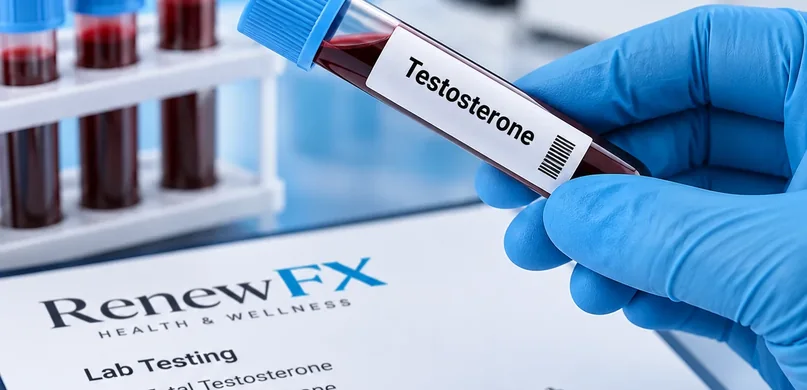
Testosterone, estradiol, blood counts, metabolic markers, and other relevant health benchmarks are monitored
throughout treatment.

Board-Certified Physician Oversight
Your treatment is reviewed periodically and adjusted as necessary, under the guidance of an experienced, board-certified physician.
Getting Started with RenewFX
Getting started with testosterone therapy at RenewFX is straightforward. Our process is designed to provide a thorough evaluation, personalized treatment recommendations, and ongoing physician-guided follow-up.
Step 1
Initial Consultation
Discuss your health concerns, symptoms, goals, objectives, and current medications with our patient care team to help identify the best next steps.
Step 2
Comprehensive Laboratory Testing
Complete the appropriate laboratory testing to evaluate testosterone levels, hormone balance, blood counts, metabolic health, and other relevant health markers.
Step 3
Physician Evaluation & Personalized Treatment Plan
Our board-certified physician reviews your medical history, symptoms, and laboratory findings to determine whether TRT is appropriate and develop an individualized plan.
Step 4
Begin Treatment & Ongoing Support
Begin your personalized treatment plan with ongoing physician oversight, follow-up, laboratory monitoring, and adjustments based on your response and individual needs.
Understanding Low Testosterone
Testosterone levels naturally change with age, but some men experience symptoms that may be associated with clinically low testosterone. These can include changes in energy, strength, body composition, sexual function, mood, motivation, recovery, and overall sense of well-being.
At RenewFX, we do not evaluate testosterone levels in isolation. Our physician considers your symptoms, health history, medications, lifestyle, and comprehensive laboratory findings to determine whether low testosterone may be contributing to how you feel and whether treatment is medically appropriate.
Common symptoms associated with low testosterone may include:
- Persistent fatigue or reduced energy
- Decreased strength or muscle mass
- Increased body fat or difficulty maintaining body composition
- Reduced libido or changes in sexual function
- Lower motivation, mood changes, or reduced sense of well-being
- Difficulty recovering from exercise
- Changes in sleep quality
- Reduced concentration or mental sharpness
Because many of these symptoms can have multiple possible causes, an accurate evaluation should look beyond a single testosterone result. RenewFX takes a comprehensive approach to identify contributing factors and develop treatment recommendations based on the broader clinical picture.
Potential Benefits of Testosterone Therapy
Testosterone replacement therapy (TRT) may help improve several aspects of health and well-being in men with clinically confirmed testosterone deficiency. Individual results vary, and treatment should be based on symptoms, laboratory findings, overall health, and ongoing physician monitoring.
Muscle Mass & Body Composition
TRT may help support lean muscle mass, strength, and healthier body composition in men with testosterone deficiency.
Bone Strength
& Density
Restoring deficient testosterone levels may help support bone density and long-term skeletal health.
Sex Drive
& Sexual Function
TRT may help improve libido and certain aspects of sexual function when low testosterone is a contributing factor.
Mood & Mental Well-Being
Appropriate treatment may help improve motivation, mood, and overall well-being in some men with low testosterone.
Energy & Vitality
TRT may help improve persistent fatigue, energy, drive, and overall vitality in men with testosterone deficiency.
Strength & Recovery
Restoring deficient testosterone levels may help support strength, physical performance, and recovery.
Why Men Choose RenewFX for TRT
RenewFX takes a personalized, concierge-style approach to testosterone therapy and hormone optimization. Rather than focusing on a single testosterone level or isolated symptom, our experienced, board-certified physician evaluates your health history, symptoms, lifestyle, medications, laboratory findings, and treatment goals to develop and monitor an individualized treatment plan designed around you.
- Experienced, Board-Certified Physician Oversight
- Comprehensive, Personalized Health Evaluation
- Concierge-Style Care & Ongoing Medical Monitoring
Meet Dr. Randy Bain
Experienced, Physician-Guided Hormone & Wellness Care
Dr. Randy Bain, DO, FAAFP, serves as Medical Director of RenewFX Health & Wellness, where he leads a comprehensive approach to hormone optimization, medical weight management, peptide therapy, and preventive wellness.
His approach begins with understanding the factors that may be contributing to changes in a patient’s health rather than relying on symptoms or laboratory values alone. Each treatment plan is developed through detailed patient discovery, comprehensive laboratory evaluation, and individualized physician assessment.
Ready to Learn if Testosterone Therapy Is Right for You?
Have questions about testosterone replacement therapy, laboratory testing, or the RenewFX treatment process? Our care team can help you understand your options and explain the next steps.
Questions? Call: +1 (713) 936-4103
Frequently Asked Questions About Testosterone Therapy
Find answers to common questions about testosterone therapy, treatment options, and physician-guided care.
What is testosterone replacement therapy (TRT)?
Testosterone replacement therapy (TRT) is a medical treatment used to restore testosterone levels in men with clinically diagnosed testosterone deficiency. Treatment may involve testosterone injections, topical medications, or other prescribed formulations. At RenewFX, TRT is physician-guided and based on symptoms, medical history, laboratory findings, and ongoing monitoring rather than a testosterone level alone.
How do I know if I have low testosterone?
Low testosterone may be associated with symptoms such as reduced energy, decreased libido, changes in mood, loss of muscle mass or strength, increased body fat, and reduced sexual function. Because these symptoms can have many other causes, diagnosis should include a medical evaluation and appropriate laboratory testing. At RenewFX, symptoms, health history, and testosterone levels are evaluated together to determine whether treatment may be appropriate.
What testosterone level is considered low?
Testosterone levels should be interpreted together with symptoms, age, medical history, the timing of the blood test, and other relevant laboratory findings. A single testosterone result does not necessarily establish testosterone deficiency. Diagnosis generally requires compatible symptoms and appropriately obtained laboratory testing, with repeat testing when clinically indicated.
What laboratory tests are used to evaluate low testosterone?
Evaluation typically includes total testosterone and may also include free testosterone, estradiol, LH, FSH, SHBG, and other laboratory markers depending on the individual. Additional testing may be used to evaluate overall health and possible causes of symptoms. At RenewFX, laboratory results are interpreted alongside symptoms, medical history, medications, and other relevant health factors before treatment recommendations are made.
What are the potential benefits of testosterone replacement therapy (TRT)?
For men with clinically confirmed testosterone deficiency, testosterone replacement therapy may help improve energy, strength, lean muscle mass, body composition, mood, motivation, sexual health, and overall well-being. Testosterone also plays an important role in maintaining bone health, physical performance, and healthy hormonal balance.
Individual results vary, and TRT is not appropriate for every patient. At RenewFX, treatment is personalized based on your symptoms, health history, laboratory findings, medications, and individual goals, with ongoing physician oversight and laboratory monitoring to help support treatment effectiveness and safety.
Can testosterone therapy improve energy and mood?
Low testosterone can contribute to fatigue, reduced motivation, and changes in mood or overall well-being in some men. When testosterone deficiency is confirmed, appropriately prescribed TRT may improve some of these symptoms. Because fatigue and mood changes can have many other causes, RenewFX evaluates symptoms, medical history, laboratory findings, sleep, medications, and other relevant health factors before attributing them to low testosterone.
Can testosterone therapy improve sexual function and libido?
Low testosterone can contribute to reduced libido and certain aspects of sexual function in some men. When testosterone deficiency is confirmed, appropriately prescribed TRT may help improve sexual desire and related symptoms. Because erectile dysfunction and other sexual concerns can also have vascular, neurological, medication-related, or psychological causes, a comprehensive evaluation can help determine whether testosterone deficiency is contributing to the problem.
Can testosterone therapy help maintain muscle mass and reduce body fat?
Testosterone plays an important role in maintaining muscle mass, strength, and body composition. In men with clinically diagnosed testosterone deficiency, appropriately prescribed TRT may help increase or preserve lean body mass and may support improvements in body composition. Results vary and are influenced by factors such as resistance training, nutrition, sleep, age, and overall health.
How long does it take to notice results from testosterone therapy?
The timeline varies depending on the individual, symptoms, testosterone levels, treatment method, and overall health. Some men may notice changes in areas such as libido, energy, or well-being within several weeks, while changes in body composition, muscle mass, and strength may take several months. Follow-up evaluation and laboratory testing help assess response and determine whether treatment adjustments are appropriate.
What forms of testosterone therapy are available?
Testosterone therapy is available in several forms, including injections, topical creams or gels, and other prescription formulations. The appropriate treatment method depends on the patient’s symptoms, laboratory findings, medical history, lifestyle, and treatment goals. At RenewFX, testosterone therapy is individualized and monitored by a physician to help achieve appropriate hormone levels while evaluating treatment response and potential side effects.
How often should testosterone levels be checked during TRT?
The frequency of laboratory testing depends on the individual treatment plan and how the patient responds to therapy. Testing is typically performed after starting or adjusting treatment and periodically once therapy is stable. At RenewFX, follow-up testing may include testosterone levels and other relevant markers to evaluate treatment response, hormone balance, and safety and to determine whether adjustments are appropriate.
What are the potential risks and side effects of testosterone therapy?
Potential risks and side effects of TRT can vary by individual and may include increased red blood cell production, acne or oily skin, changes in fertility, fluid retention, and other hormone-related effects. Testosterone therapy can also affect prostate-related monitoring and cardiovascular risk factors in some patients. Appropriate dosing, laboratory testing, and ongoing physician follow-up are important for monitoring treatment response and identifying potential concerns.
Can testosterone therapy increase red blood cell levels or hematocrit?
Yes. Testosterone therapy can stimulate red blood cell production and may increase hemoglobin and hematocrit in some patients. Excessive elevations may require further evaluation or changes to the treatment plan. At RenewFX, blood counts are monitored periodically along with hormone levels and other relevant laboratory markers to help ensure TRT remains appropriate and safely managed.
Does testosterone therapy affect fertility?
Testosterone replacement therapy can suppress the hypothalamic-pituitary-gonadal (HPG) axis, reducing the hormonal signals that support natural testosterone and sperm production. At RenewFX, TRT treatment plans may include additional therapies intended to stimulate testicular function and help preserve natural hormone production, sexual function, and fertility potential during treatment. Because individual responses vary, men who wish to maintain fertility should discuss their reproductive goals with their physician before and during TRT.
Will testosterone therapy cause testicular shrinkage?
TRT can suppress the hypothalamic-pituitary-gonadal (HPG) axis, reducing the signals that normally stimulate the testes and potentially leading to decreased testicular activity and size. At RenewFX, TRT treatment plans may include additional therapies intended to stimulate testicular function and help minimize suppression during treatment. Treatment is individualized based on the patient’s health, goals, laboratory findings, and physician evaluation.
Does testosterone therapy increase the risk of prostate cancer?
Current evidence does not show that appropriately prescribed testosterone therapy causes prostate cancer. However, testosterone can affect prostate tissue, so prostate health should be considered before and during treatment when clinically appropriate. At RenewFX, factors such as age, medical history, symptoms, and PSA testing are considered as part of ongoing physician-guided TRT monitoring.
Does testosterone therapy increase cardiovascular risk?
Cardiovascular risk should be evaluated individually before and during testosterone therapy. Current evidence does not indicate that appropriately prescribed TRT universally increases cardiovascular risk in men with testosterone deficiency, but individual health factors such as blood pressure, cholesterol, blood counts, smoking history, and existing cardiovascular disease remain important. At RenewFX, TRT is physician-guided with appropriate laboratory testing and ongoing monitoring.
Can testosterone therapy be combined with other hormone optimization treatments?
Yes. When clinically appropriate, testosterone therapy may be used alongside other treatments, such as peptide therapies, and hormone therapies, designed to address specific hormonal or health needs. At RenewFX, each component of a treatment plan is evaluated individually based on symptoms, laboratory findings, medical history, and treatment goals. Ongoing physician monitoring helps assess hormone balance, treatment response, and whether adjustments are appropriate.
Progesterone also plays a role in male hormone physiology, and some men on TRT may benefit from understanding how it relates to overall hormone balance. Learn more about the role of progesterone in men on TRT.
How long do men typically stay on testosterone replacement therapy?
The duration of TRT depends on the reason for treatment, the patient’s response, health status, and treatment goals. For men with persistent testosterone deficiency who continue to benefit from therapy, TRT may be a long-term treatment. Regular physician follow-up and laboratory monitoring help determine whether treatment remains appropriate and whether adjustments are needed over time.
What happens if I stop testosterone replacement therapy?
After TRT is discontinued, testosterone levels may gradually return toward their pretreatment levels, and symptoms associated with testosterone deficiency may return. Because TRT can suppress the HPG axis and the body’s natural testosterone production, recovery after discontinuation can vary between individuals. Any decision to stop treatment should be discussed with a physician so hormone levels, symptoms, and testicular function can be appropriately evaluated and managed.
What makes RenewFX different from other TRT and hormone optimization clinics?
RenewFX takes a comprehensive, physician-guided approach backed by more than 15 years of specialization and experience in hormone and peptide therapies. Patients are evaluated, treated, and managed on an ongoing basis by our board-certified Medical Director—not by physician assistants or technicians. Our integrative approach looks beyond a single hormone level, isolated symptom, or number on a laboratory report. We consider the patient’s overall health, symptoms, medical history, hormone balance, lifestyle, treatment goals, and laboratory findings to develop an individualized treatment plan. Ongoing physician follow-up and laboratory monitoring allow treatment to be adjusted as the patient’s needs and health change over time.