
HGH Peptide Therapy in Houston
Personalized. Physician-Guided. Evidence-Informed.
RenewFX provides physician-guided HGH peptide therapy in Houston and throughout Texas, including Sermorelin-based treatment when clinically appropriate. HGH peptide therapy is designed to support the body’s natural growth hormone signaling rather than supply recombinant human growth hormone directly.
Our individualized approach evaluates your symptoms, health history, goals, and laboratory findings—including IGF-1 and other relevant health markers—to determine whether growth hormone–releasing peptide therapy may be appropriate for you.
- Comprehensive Health & Wellness Evaluation
- Personalized Peptide Treatment Plans
- Experienced, Board-Certified Physician Oversight
- Ongoing Lab Monitoring & Treatment Adjustments
- Telemedicine Care Available Across Texas
Questions? Call: +1 (713) 936-4103

HGH Peptide Therapy in Houston and Across Texas
RenewFX provides physician-guided HGH peptide therapy for eligible patients in Houston and throughout Texas, including Sermorelin-based treatment when clinically appropriate. Our telemedicine-based model makes it convenient to complete consultations virtually, arrange laboratory testing locally, and receive personalized treatment with ongoing physician oversight and medical monitoring.
Depending on your individual needs, your precision treatment plan may also incorporate broader peptide therapy or hormone optimization as part of a comprehensive treatment strategy.

Comprehensive Growth Hormone Evaluation
We evaluate your symptoms, health and medical history, medications, lifestyle, goals, and relevant laboratory findings—including IGF-1 and other growth hormone–related markers when appropriate.

Personalized HGH Peptide Treatment
When clinically appropriate, treatment may include Sermorelin or other growth hormone–related peptide therapy, individualized based on your clinical needs, laboratory findings, goals, and response
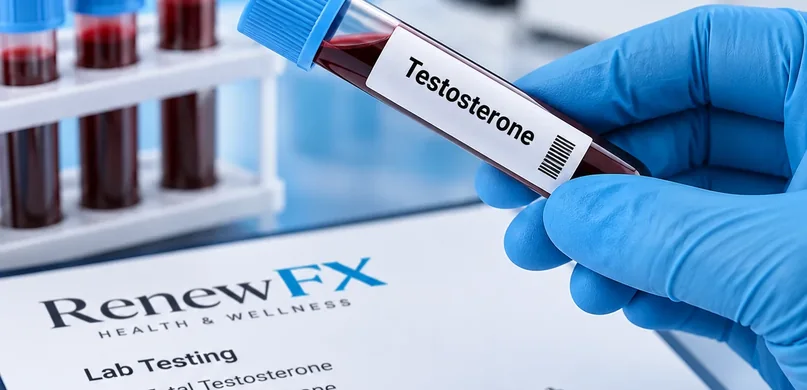
GH & IGF-1 Monitoring
Relevant hormone, metabolic, and wellness markers may be monitored throughout treatment to evaluate response and help guide appropriate treatment adjustments.
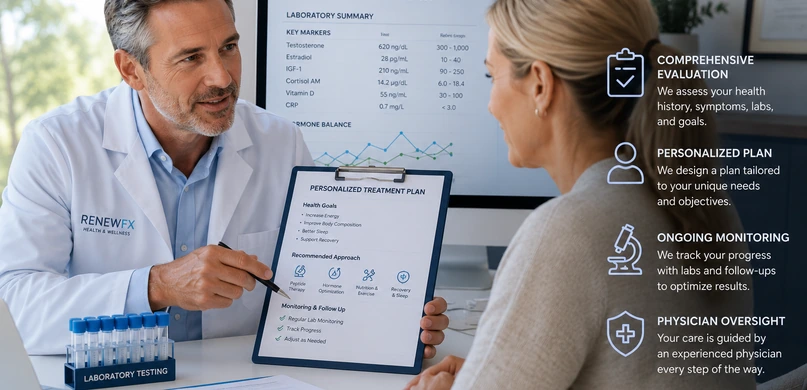
Board-Certified Physician Oversight
Your treatment plan is reviewed and monitored by an experienced, board-certified physician, with adjustments made when clinically appropriate.
Getting Started with RenewFX
Getting started with HGH peptide therapy at RenewFX is straightforward. Our process is designed to provide a thorough evaluation, personalized treatment recommendations, and ongoing physician-guided follow-up.
Step 1
Initial Consultation
Discuss your symptoms, health history, medications, lifestyle, and treatment goals with our care team.
Step 2
Comprehensive Laboratory Testing
Complete appropriate laboratory testing to evaluate IGF-1, hormone balance, metabolic health, blood counts, and other relevant health markers based on your clinical needs.
Step 3
Physician Evaluation & Personalized Treatment Plan
Our board-certified physician reviews your history, symptoms, goals, and laboratory findings to determine whether HGH peptide therapy may be appropriate and develop an individualized treatment plan.
Step 4
Begin Treatment & Ongoing Support
If treatment is recommended, begin your personalized plan with ongoing physician oversight, follow-up, laboratory monitoring, and treatment adjustments when clinically appropriate.
Questions? Call: +1 (713) 936-4103
What Is HGH Peptide Therapy?
HGH peptide therapy uses specific peptides designed to stimulate or support the body’s natural growth hormone signaling rather than supplying human growth hormone directly. Depending on the therapy, these peptides may encourage the pituitary gland to release more growth hormone, which can influence downstream markers such as IGF-1.
At RenewFX, therapies such as Sermorelin may be considered when clinically appropriate as part of a broader approach to recovery, body composition, sleep, energy, and healthy aging. Treatment recommendations are based on your symptoms, health history, goals, laboratory findings, and overall medical picture.
Unlike prescription HGH, growth hormone–releasing peptides work through the body’s own signaling pathways. Because individual peptides differ in mechanism, clinical evidence, regulatory status, and potential risks, treatment should be personalized and monitored under physician supervision.
Patients interested in broader peptide-based care can also learn more about Peptide Therapy and Hormone Therapy.
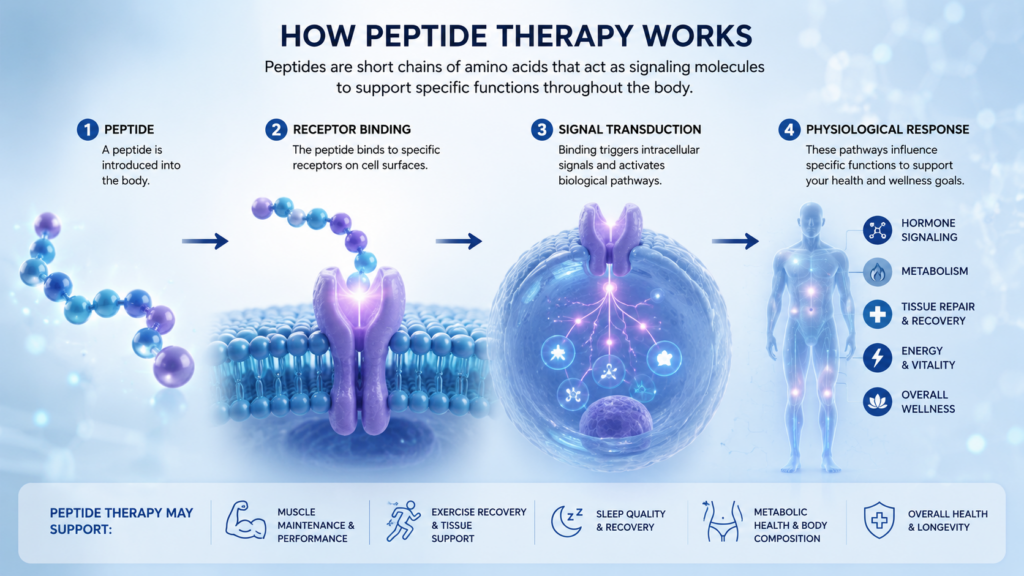
How HGH Peptide Therapy Is Personalized at RenewFX
HGH peptide therapy is not a one-size-fits-all treatment. At RenewFX, recommendations begin with a comprehensive evaluation of your symptoms, health history, medications, lifestyle, goals, and relevant laboratory findings, including IGF-1 and other growth hormone–related markers when appropriate.
When clinically appropriate, a personalized treatment plan may include Sermorelin or other growth hormone–related peptide therapies as part of a broader strategy that can also incorporate peptide therapy, hormone optimization, nutrition, exercise, recovery, body-composition management, and other preventive wellness measures.
Ongoing physician oversight and follow-up help evaluate your response, monitor relevant health markers, and determine whether treatment adjustments are appropriate over time.
Potential Benefits of HGH Peptide Therapy
Growth hormone–related peptide therapies may support pathways involved in recovery, body composition, sleep, energy, and healthy aging. Potential benefits vary depending on the specific therapy, your health status, laboratory findings, and individual response. At RenewFX, treatment is personalized and monitored under physician oversight.
Strength & Physical Performance
Growth hormone signaling plays a role in recovery, body composition, and physical function. When clinically appropriate, HGH peptide therapy may complement an individualized plan focused on strength, performance, and overall wellness.
Recovery & Tissue Support
Growth hormone signaling is involved in tissue maintenance and recovery. Certain peptide therapies may support recovery-related pathways when medically appropriate and guided by physician oversight.
Metabolic Health & Body Composition
Certain growth hormone–related peptides may influence pathways involved in fat metabolism, lean body mass, and overall body composition. Treatment is individualized based on your health history, goals, and laboratory findings.
Sleep & Recovery
Natural growth hormone release is closely associated with sleep and restorative recovery. Certain peptide therapies may influence growth hormone signaling during periods of rest.
Energy & Vitality
When underlying hormone-related factors are appropriately evaluated and treated, some patients may experience improvements in energy, vitality, and overall well-being.
Healthy Aging & Wellness
Growth hormone signaling changes with age. Physician-guided HGH peptide therapy may be considered as part of a broader approach to healthy aging, recovery, metabolic health, and overall wellness.
Peptide Therapy Considerations
HGH Peptide Therapy vs. Prescription HGH
Learn more about prescription HGH therapy in Houston and how it differs from HGH peptide therapy.
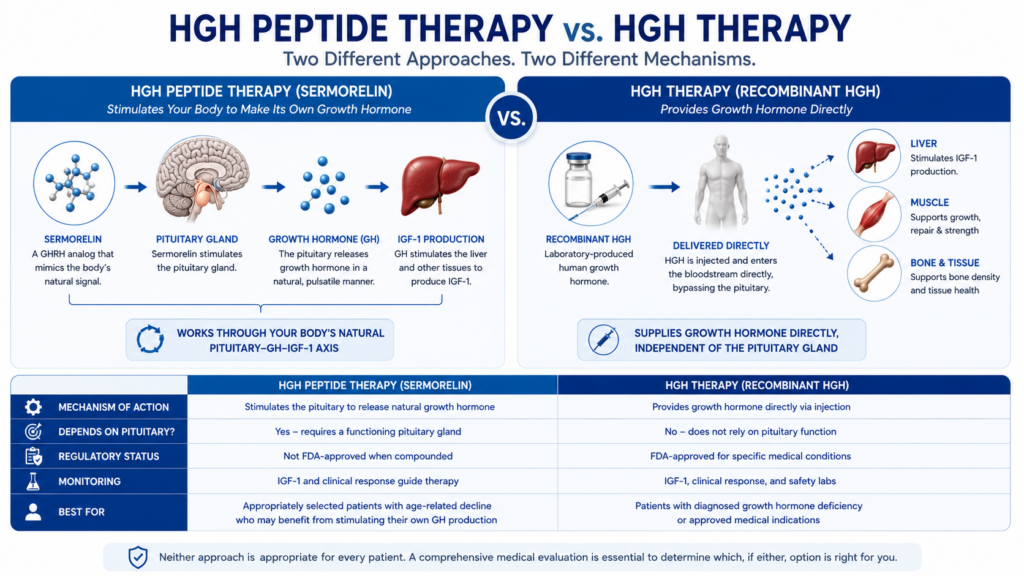
HGH Peptide Therapy vs. Prescription HGH
HGH peptide therapy is designed to stimulate or support the body’s own growth hormone signaling, while prescription human growth hormone (HGH) provides growth hormone directly. The two approaches differ in how they work, their clinical uses, monitoring requirements, potential risks, and regulatory considerations. RenewFX evaluates each patient individually to determine which approach, if any, may be medically appropriate.
Peptide Safety, Quality & Medical Oversight
HGH peptide therapy should be approached carefully and under appropriate medical supervision. Individual peptides differ in available clinical evidence, regulatory status, potential risks, and pharmacy availability. RenewFX evaluates treatment options based on your health history, laboratory findings, current evidence, and applicable medical requirements, with ongoing physician oversight and monitoring.
Why Patients Choose RenewFX for HGH Peptide Therapy
RenewFX takes a comprehensive, concierge-style approach to HGH peptide therapy and growth hormone optimization. Rather than recommending treatment based on a single symptom or laboratory value, our experienced, board-certified physician evaluates your health history, symptoms, medications, lifestyle, hormone balance, laboratory findings, and goals to determine treatment planning.
When clinically indicated, your plan is personalized and may incorporate broader peptide therapy or hormone optimization as part of a comprehensive wellness strategy. Ongoing physician oversight, laboratory monitoring, follow-up, and treatment adjustments help ensure your care continues to reflect your individual response and evolving health needs.
- Experienced, Board-Certified Physician Oversight
- Comprehensive, Personalized Health Evaluation
- Concierge-Style Care & Ongoing Medical Monitoring
Meet Dr. Randy Bain
Experienced, Physician-Guided Hormone & Wellness Care
Dr. Randy Bain, DO, FAAFP, serves as Medical Director of RenewFX Health & Wellness, where he leads a comprehensive approach to hormone optimization, medical weight management, peptide therapy, and preventive wellness.
His approach begins with understanding the factors that may be contributing to changes in a patient’s health rather than relying on symptoms or laboratory values alone. Each treatment plan is developed through detailed patient discovery, comprehensive laboratory evaluation, and individualized physician assessment.
Ready to Learn if HGH Peptide Therapy Is Right for You?
Have questions about HGH Peptide therapy, laboratory testing, or the RenewFX treatment process?
Our care team can help you understand your options and explain the next steps.
Questions? Call: +1 (713) 936-4103
Frequently Asked Questions About HGH Peptide Therapy
Find answers to common questions about growth hormone peptides, Sermorelin, treatment options, and physician-guided care.
What are HGH peptides?
HGH peptides are compounds that may stimulate the body’s natural production and release of growth hormone. Some, such as Sermorelin, work by signaling the pituitary gland to release growth hormone rather than supplying growth hormone directly. Whether peptide therapy is appropriate depends on your symptoms, health history, goals, laboratory findings, and physician evaluation.
How does Sermorelin work?
Sermorelin is a growth hormone–releasing hormone (GHRH) analog that stimulates the pituitary gland to release growth hormone. This may increase the body’s natural growth hormone activity and influence IGF-1 levels. Treatment response varies by individual and should be monitored by a physician using symptoms, clinical response, and appropriate laboratory testing.
What is the difference between HGH and HGH peptides?
HGH therapy provides growth hormone directly, while growth hormone–releasing peptides are designed to stimulate the body’s own growth hormone production. Peptides such as Sermorelin act through signaling pathways involving the pituitary gland. The appropriate approach depends on a patient’s medical history, symptoms, laboratory findings, treatment goals, and physician evaluation.
What are the potential benefits of growth hormone peptide therapy?
Depending on the individual and the therapy used, growth hormone peptide therapy may support body composition, recovery, sleep quality, energy, and overall well-being. Results vary, and treatment should be based on appropriate medical evaluation and laboratory findings rather than symptoms alone.
Who may be a candidate for HGH peptide therapy?
HGH peptide therapy may be considered for appropriately selected adults based on their symptoms, health history, treatment goals, and laboratory findings. A physician may evaluate factors such as IGF-1 levels, metabolic health, hormone status, medications, and overall medical history before determining whether growth hormone peptide therapy is appropriate.
What lab testing is used for HGH peptide therapy?
Laboratory testing may include IGF-1 along with other hormone and metabolic markers based on the patient’s health history and treatment goals. At RenewFX, baseline and follow-up testing may be used along with symptoms and clinical response to help guide treatment and monitor therapy over time.
How long does it take to notice results from HGH peptide therapy?
Response to HGH peptide therapy varies from person to person. Some patients may notice changes in areas such as sleep, recovery, or energy within several weeks, while changes in body composition or other longer-term goals may take several months. Treatment response should be evaluated over time through clinical follow-up and appropriate laboratory monitoring.
Can HGH peptide therapy be used with testosterone replacement therapy (TRT)?
HGH peptide therapy and testosterone replacement therapy work through different hormonal pathways and may be considered together when each treatment is independently appropriate. At RenewFX, treatment decisions are based on symptoms, health history, laboratory findings, and individual goals, with ongoing physician monitoring to evaluate response and adjust therapy when needed.
Can HGH peptide therapy be managed through telemedicine in Texas?
Yes. RenewFX provides physician-guided telemedicine care for eligible patients throughout Texas when clinically appropriate. Evaluation may include a review of symptoms, medical history, treatment goals, and laboratory testing, with ongoing physician follow-up and monitoring. Medication prescribing and availability are subject to current medical and regulatory requirements.
How is HGH peptide therapy monitored?
HGH peptide therapy should be monitored through regular physician follow-up, assessment of symptoms and treatment response, and appropriate laboratory testing. Depending on the individual, monitoring may include IGF-1 and other relevant hormone or metabolic markers. At RenewFX, treatment is adjusted when appropriate based on clinical response, laboratory findings, and overall health.
Are there side effects or risks with HGH peptide therapy?
HGH peptide therapy can cause side effects, and individual response varies. Depending on the medication and patient, potential effects may include injection-site reactions, headache, flushing, dizziness, changes in appetite, or fluid retention. Physician supervision and appropriate laboratory monitoring help determine whether treatment remains appropriate and whether adjustments are needed.
How often is HGH peptide therapy typically administered?
The treatment schedule for HGH peptide therapy depends on the specific medication, the patient’s individual needs, and the prescribing physician’s treatment plan. Some therapies may be administered by subcutaneous injection on a regular schedule. Dosing and frequency should be individualized based on clinical evaluation, treatment response, laboratory findings, and ongoing medical monitoring.
How long can someone stay on HGH peptide therapy?
The appropriate length of HGH peptide therapy varies by individual. Continued treatment should be based on clinical response, treatment goals, laboratory findings, tolerability, and ongoing physician evaluation. At RenewFX, therapy is periodically reassessed to determine whether continued treatment remains appropriate.
What is the difference between Sermorelin and other growth hormone peptides?
Sermorelin is a growth hormone–releasing hormone (GHRH) analog that stimulates the pituitary gland to release growth hormone. Other peptides may act through different receptors or signaling pathways and can differ in their effects, clinical evidence, availability, and regulatory status. The choice of therapy should be individualized and determined by a physician based on the patient’s health history, laboratory findings, and treatment goals.
Does HGH peptide therapy increase IGF-1 levels?
Growth hormone–releasing peptides such as Sermorelin may increase growth hormone secretion, which can in turn influence IGF-1 production. The degree of response varies among individuals. IGF-1 testing may be used along with symptoms and clinical response to help evaluate and monitor therapy.
Is HGH peptide therapy only for men?
No. HGH peptide therapy may be considered for both men and women when clinically appropriate. Treatment decisions are based on the individual’s symptoms, health history, laboratory findings, and treatment goals rather than sex alone. At RenewFX, each patient is evaluated individually before therapy is recommended.
Does age affect natural growth hormone levels?
Yes. Growth hormone secretion generally declines with age, although the rate and degree of decline vary among individuals. Lower growth hormone activity can also be influenced by factors such as sleep, body composition, metabolic health, medications, and underlying medical conditions. Age-related changes alone do not determine whether HGH peptide therapy is appropriate; treatment should be based on an individualized medical evaluation.
Why choose physician-guided HGH peptide therapy?
Physician-guided HGH peptide therapy begins with a comprehensive evaluation rather than a one-size-fits-all treatment plan. At RenewFX, treatment decisions are based on your medical history, symptoms, health goals, and laboratory findings, with ongoing physician oversight to monitor response and determine whether therapy remains appropriate.
How do I get started with HGH peptide therapy at RenewFX?
Getting started begins with a physician-guided evaluation of your health history, symptoms, goals, and relevant laboratory findings. RenewFX uses this information to determine whether HGH peptide therapy may be appropriate and to develop an individualized treatment and monitoring plan. Consultations are available in Houston and through telemedicine for eligible patients throughout Texas.
Get Started with RenewFX Today!
Ready to Learn if HGH Peptide Therapy Is Right for You?
Have questions about HGH Peptide therapy, laboratory testing, or the RenewFX treatment process?
Our care team can help you understand your options and explain the next steps.
Questions? Call: +1 (713) 936-4103