
Prescription HGH Therapy in Houston: What Patients Should Know
Personalized. Physician-Guided. Evidence-Informed.
Prescription human growth hormone (HGH) therapy uses recombinant human growth hormone supplied directly to the body. It is different from therapies that are designed to stimulate or support the body’s own growth hormone signaling, and it is generally reserved for specific medical indications that require appropriate diagnosis and physician monitoring.
At RenewFX, we provide this page as an educational resource to help patients better understand prescription HGH, growth hormone physiology, IGF-1, and how these approaches differ from HGH peptide therapy. Patients interested in physician-guided hormone and peptide care can also learn more about our Peptide Therapy and Hormone Therapy services.
- Comprehensive Growth Hormone & Health Evaluation
- Personalized Treatment Planning
- IGF-1 & Relevant Laboratory Monitoring
- Experienced, Board-Certified Physician Oversight
- Telemedicine Care Available Across Texas
Questions? Call: +1 (713) 936-4103

Understanding Prescription HGH Therapy in Houston & Across Texas
Human growth hormone is produced naturally by the pituitary gland and plays a role in growth, metabolism, body composition, tissue repair, and other physiologic processes. Prescription HGH is a laboratory-produced version of human growth hormone that is used for specific medical indications when clinically appropriate.
Evaluation of growth hormone status may include symptoms, medical history, IGF-1 levels, and other relevant laboratory findings. Because growth hormone secretion varies throughout the day, diagnosis is not based on a single random HGH blood level alone.
Prescription HGH is different from HGH peptide therapy, which is intended to influence the body’s own growth hormone signaling rather than provide recombinant growth hormone directly.

Understanding Prescription HGH
Learn how recombinant human growth hormone differs from the hormone your body produces naturally.
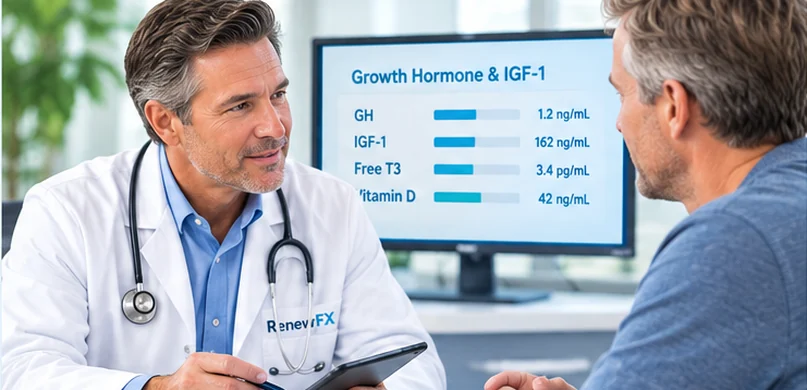
Growth Hormone Deficiency
Understand when HGH may be medically appropriate and why diagnosis requires proper clinical evaluation.
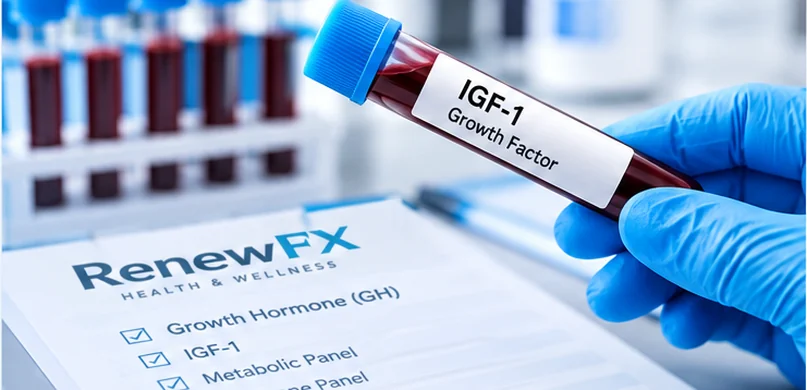
IGF-1 & Growth Hormone Testing
Learn why IGF-1 and other testing may be used when evaluating the growth hormone axis.

HGH Risks & Medical Monitoring
Review potential side effects, monitoring considerations, and why physician supervision matters.
Understanding HGH Evaluation and Diagnosis
Evaluating possible growth hormone deficiency requires more than a single HGH blood test. Because growth hormone is released in pulses throughout the day, physicians consider medical history, symptoms, IGF-1 levels, and other relevant findings when determining whether additional diagnostic testing may be appropriate.
Medical History & Symptoms
A clinical evaluation may include symptoms, medications, prior medical conditions, pituitary history, changes in body composition, energy, physical function, and other factors that may help determine whether further evaluation is warranted.
IGF-1 & Laboratory Testing
IGF-1 is commonly evaluated as part of an assessment of the growth hormone axis. Other hormone and metabolic laboratory tests may also be appropriate depending on the individual’s medical history and clinical findings.
Growth Hormone Stimulation Testing
Because growth hormone levels naturally fluctuate throughout the day, a random HGH blood level generally cannot diagnose adult growth hormone deficiency. When deficiency is suspected, specialized stimulation testing may be needed.
Physician Diagnosis & Medical Monitoring
Growth hormone deficiency should be diagnosed by a qualified medical professional based on the complete clinical picture. When prescription HGH is medically indicated, treatment requires appropriate dosing, follow-up, and ongoing monitoring.
What Is IGF-1 and Why Does It Matter?
Insulin-like growth factor 1 (IGF-1) is produced primarily in the liver in response to growth hormone signaling. Because growth hormone levels fluctuate throughout the day, IGF-1 can provide useful information about activity within the growth hormone axis and is commonly considered when evaluating possible growth hormone deficiency.
IGF-1 levels must be interpreted in context. Age, nutritional status, liver function, other hormone conditions, medications, and underlying health issues can influence results. An IGF-1 result alone does not establish a diagnosis of adult growth hormone deficiency.
When Is Prescription HGH Therapy Medically Appropriate?
Prescription HGH is generally reserved for specific medical conditions in which growth hormone deficiency has been appropriately evaluated and diagnosed. In adults, this may include growth hormone deficiency related to pituitary or hypothalamic disease, prior surgery or radiation involving the pituitary region, certain traumatic injuries, or persistent childhood-onset growth hormone deficiency.
Treatment decisions should be based on the individual’s medical history, clinical findings, laboratory evaluation, and—when appropriate—specialized diagnostic testing. Prescription HGH is not intended simply to address normal age-related changes in energy, body composition, or physical performance.
Potential Benefits of HGH Replacement in Diagnosed Growth Hormone Deficiency
For adults with confirmed growth hormone deficiency, appropriately prescribed HGH replacement may help improve body composition, bone health, exercise capacity, and certain measures of quality of life. Response varies from person to person, and treatment should be individualized and medically monitored.
Exercise Capacity & Physical Function
Some patients with confirmed deficiency may experience improvements in exercise capacity and physical function.
Increased Collagen Production
HGH replacement may enhance collagen production, helping maintain skin, bone, tendons, ligaments, and connective tissue.
Body Composition
HGH replacement may help improve lean body mass and reduce fat mass in adults with confirmed growth hormone deficiency.
Risks and Side Effects of Prescription HGH
Prescription HGH can cause side effects and is not appropriate for everyone. Potential effects may include fluid retention, joint or muscle discomfort, swelling, carpal tunnel–type symptoms, and changes in glucose metabolism. Appropriate dosing and regular medical follow-up are important to help monitor response and reduce unnecessary risk.
Prescription HGH vs. HGH Peptide Therapy
Prescription HGH provides recombinant human growth hormone directly to the body. Growth hormone–related peptide therapies work differently by influencing signaling involved in the body’s own growth hormone production or release.
The two approaches differ in their mechanisms, clinical uses, evidence, regulatory considerations, and monitoring requirements. Patients interested in physician-guided growth hormone–related peptide options can learn more about our HGH Peptide Therapy program.
Explore Physician-Guided Hormone & Peptide Care at RenewFX
For patients interested in other physician-guided approaches to hormone optimization and wellness, RenewFX provides comprehensive Hormone Therapy, HGH Peptide Therapy, and broader Peptide Therapy for eligible patients in Houston and throughout Texas.
Meet Dr. Randy Bain
Experienced, Physician-Guided Hormone & Wellness Care
Dr. Randy Bain, DO, FAAFP, serves as Medical Director of RenewFX Health & Wellness, where he leads a comprehensive approach to hormone optimization, medical weight management, peptide therapy, and preventive wellness.
His approach begins with understanding the factors that may be contributing to changes in a patient’s health rather than relying on symptoms or laboratory values alone. Each treatment plan is developed through detailed patient discovery, comprehensive laboratory evaluation, and individualized physician assessment.
Have Questions About RenewFX Treatment Options?
The RenewFX care team can help you learn more about the physician-guided hormone and peptide therapies available through our practice.
Questions? Call: +1 (713) 936-4103
Frequently Asked Questions About HGH Therapy
Find answers to common questions about prescription human growth hormone, adult growth hormone deficiency, IGF-1 testing, potential benefits, risks, and how prescription HGH differs from growth hormone peptide therapy.
What is human growth hormone (HGH)?
Human growth hormone is a hormone produced naturally by the pituitary gland. It plays an important role in growth, metabolism, body composition, bone health, tissue maintenance, and other physiologic processes.
What is prescription HGH therapy?
Prescription HGH therapy uses recombinant human growth hormone that is manufactured to function like naturally occurring human growth hormone. It is prescribed for specific medical indications when appropriate.
What is prescription HGH used to treat in adults?
In adults, prescription HGH may be used for appropriately diagnosed growth hormone deficiency associated with conditions affecting the pituitary or hypothalamus, prior pituitary surgery or radiation, certain injuries, or persistent childhood-onset growth hormone deficiency.
What causes adult growth hormone deficiency?
Adult growth hormone deficiency can result from pituitary or hypothalamic disorders, tumors, surgery, radiation therapy, traumatic injury, or continuation of growth hormone deficiency that began during childhood. In some cases, the cause may not be clearly identified.
How is adult growth hormone deficiency diagnosed?
Diagnosis generally involves a review of medical history, symptoms, pituitary function, IGF-1 levels, and other relevant findings. Specialized growth hormone stimulation testing may also be required.
Can a single HGH blood test diagnose growth hormone deficiency?
Generally, no. Growth hormone is released in pulses throughout the day, so a random HGH measurement may not accurately reflect overall growth hormone production. Additional evaluation and, when appropriate, stimulation testing may be needed.
What is IGF-1?
Insulin-like growth factor 1, or IGF-1, is produced primarily in the liver in response to growth hormone signaling. IGF-1 is commonly considered when evaluating the growth hormone axis because its levels are more stable than random growth hormone measurements.
What is the relationship between HGH and IGF-1?
Growth hormone stimulates the production of IGF-1 in the liver and other tissues. Many of the effects associated with growth hormone signaling are mediated in part through IGF-1.
What are the potential benefits of HGH replacement for diagnosed growth hormone deficiency?
In appropriately diagnosed adults, HGH replacement may support improvements in body composition, exercise capacity, connective-tissue and skeletal health, and certain measures of quality of life. Individual response varies.
What are the risks and side effects of prescription HGH?
Potential side effects may include fluid retention, swelling, joint or muscle discomfort, carpal tunnel–type symptoms, and changes in glucose metabolism. Treatment requires appropriate physician supervision and monitoring.
Is HGH approved for anti-aging?
Prescription HGH is not intended as a general anti-aging treatment for otherwise healthy adults. Age-related changes in energy, body composition, or physical performance alone do not establish growth hormone deficiency.
Can HGH be used for bodybuilding or athletic performance?
Prescription HGH should not be viewed as a general muscle-building or performance-enhancement therapy. Medical use is based on specific diagnosed conditions and appropriate physician evaluation.
What is the difference between prescription HGH and HGH peptide therapy?
Prescription HGH provides recombinant human growth hormone directly to the body. HGH peptide therapy works differently by influencing signaling involved in the body’s own growth hormone production or release.
What growth hormone–related services does RenewFX offer?
RenewFX offers physician-guided Hormone Therapy and selected peptide therapies for eligible patients. Patients interested in growth hormone–related peptide options can learn more about HGH Peptide Therapy and broader Peptide Therapy available through RenewFX.